Ready to discover some truly fascinating komodo dragon facts? They’re more than just trivia, but the key to understanding one of the most fascinating creatures on Earth.
Found only in a few remote islands in Indonesia, these massive lizards are the stuff of legends. But what’s real and what’s just myth? From sensory prowess to evolutionary quirks, let’s dive in and explore some incredible truths about the largest living lizard.
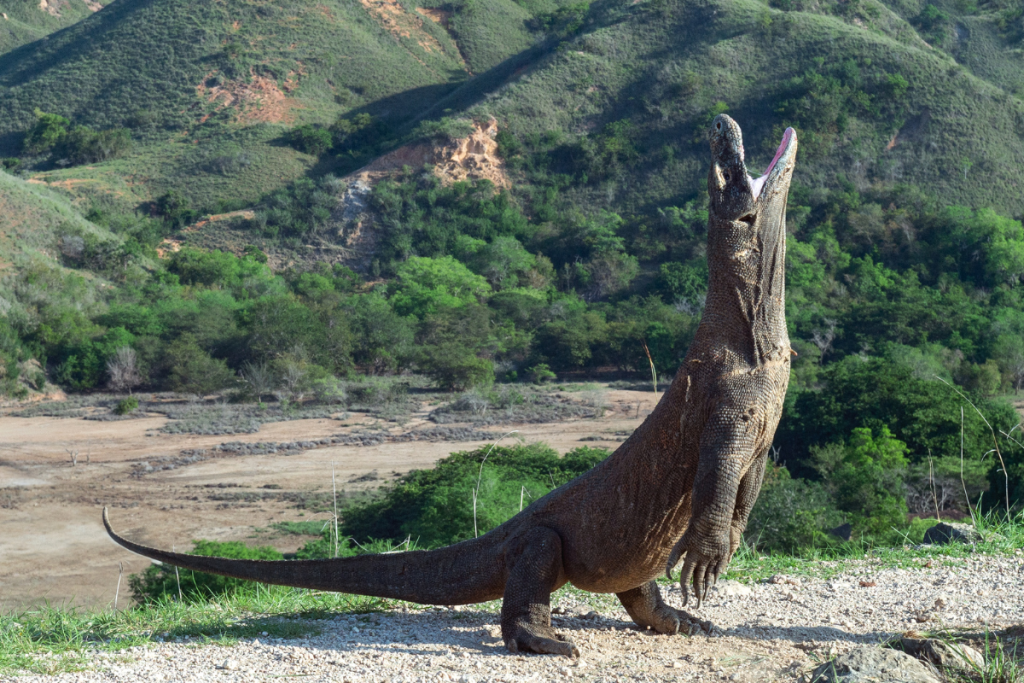
At first glance, the Komodo dragon may seem like just a giant lizard. But look closer, and you'll discover more.
These creatures aren’t just big—they’re complex, with behaviors and traits that surprise even seasoned wildlife enthusiasts.
From its ability to reproduce without a mate to a venomous bite, here are some wild things that make this reptile extraordinary.
Forget nostrils — Komodo dragons rely on long, forked tongues to “taste” the air. They use a special organ called Jacobson’s organ located on the roof of their mouth.
When they flick their tongue out, they collect scent particles and then push them up to this organ to analyze their surroundings. This unique ability allows them to detect prey from as far as 2.5 miles away.
One of the most misunderstood things about Komodos is their bite. For a long time, people believed they killed using bacteria-laced saliva. That’s only partly true.
Yes, their mouths do carry tons of harmful microbes, but they also have venom glands in their jaws.
This komodo venom contains toxins that lower blood pressure, thin the blood, and prevent clotting, which causes its prey to go into shock and bleed out quickly.
Talk about independence! Here’s where it gets really weird. Female Komodo dragons can lay eggs without mating — a process called parthenogenesis.
This usually happens when a female is isolated from males, like in zoos or on small islands. It’s nature’s backup plan to ensure the species' survival, even with a limited population.
However, offspring produced this way are always male, due to their unique chromosome system.
These guys don’t play around when it comes to food. Komodos can eat up to 80% of their body weight in a single meal. Imagine a 150-pound person eating 120 pounds of food in one sitting. Wild, right?
The Komodo dragon diet includes deer, wild boars, goats, smaller Komodos, and even water buffalo.
Usually, after such a big meal, they may fast for weeks, relying on their efficient metabolism. This gorging ability helps them thrive in areas where food isn’t always plentiful.
Despite their bulky appearance, Komodo dragons are strong swimmers. They’ve been known to swim from island to island across strong ocean currents. Some have been recorded swimming up to 3 miles from the coastline.
So, next time a Komodo chases you, don’t ever think to run away through the sea.
If you ever get the chance to see one up close, check out its skin. It’s rough, grayish, and tough.
Under that tough surface, Komodo dragons have osteoderms: tiny bone plates embedded beneath their skin. These plates act like armor, offering extra protection from injuries during fights with other dragons or prey.
Yes, it’s true — Komodo dragons eat each other. In fact, up to 10% of a Komodo dragon’s diet can consist of younger dragons.
This is why young ones often hide in trees or roll around in feces to mask their scent. Cannibalism typically happens when food is scarce or during territorial battles.
While the adult Komodo dragons are more earthbound due to their massive size, juveniles are excellent climbers.
They use their strong claws to scale trees, where they hide from predators — including adult dragons. They usually stay in trees for the first few years of their life until they grow big enough to fend for themselves.
So, stay alert when you climb a tree while trying to avoid one. In case there is a little one above you.
A Komodo’s tail is nearly as long as its body and incredibly muscular. It’s used for balance when running and swimming, but also doubles as a powerful weapon.
They’ll swing it like a whip to knock down rivals or prey in fights. Some observers have seen them use their tail to trip deer before going in for the kill.
Believe it or not, the ancestors of the Komodo dragon are thought to have originated in Australia. Fossil evidence suggests that these giant lizards migrated westward to the Indonesian archipelago millions of years ago.
Today, they’re only found on five islands in the area of Komodo National Park: Komodo, Rinca, Gili Motang, Padar, and western Flores. Each of these islands offers the perfect komodo dragon habitat, with savannahs, forests, and enough prey to keep them fed.
Komodo dragon lifespan is up to 30 years in the wild, though many don’t survive that long due to harsh conditions and predators.
A female typically lays around 20–30 eggs per clutch. The eggs are buried in nests, and hatchlings emerge about eight months later, completely on their own.
These dragons have up to 60 teeth, each around an inch long and serrated like a steak knife. Like sharks, they shed and regrow their teeth regularly throughout their lives.
Komodo dragon’s teeth are tipped with a protective layer of iron. This layer helps maintain the teeth's sharpness and ability to rip flesh. The iron is concentrated along the cutting edges and tips, giving them an orange hue.

Now that you know these wild truths, wouldn’t it be incredible to see a Komodo dragon in its natural habitat?
You can witness these creatures in real life, walking through sunlit forests, basking on the beach, or even hunting wild prey. There’s nothing like the thrill of spotting a Komodo on Komodo Island or Rinca.
And the best part? You don’t have to plan the trip alone.
Consider joining a guided tour if you're ready to turn these Komodo dragon facts into real-life memories. Lombok Touristic offers specialized Komodo tour packages that include everything. Book your trip today at Lombok Touristic and experience the wonder of Komodo dragons for yourself!